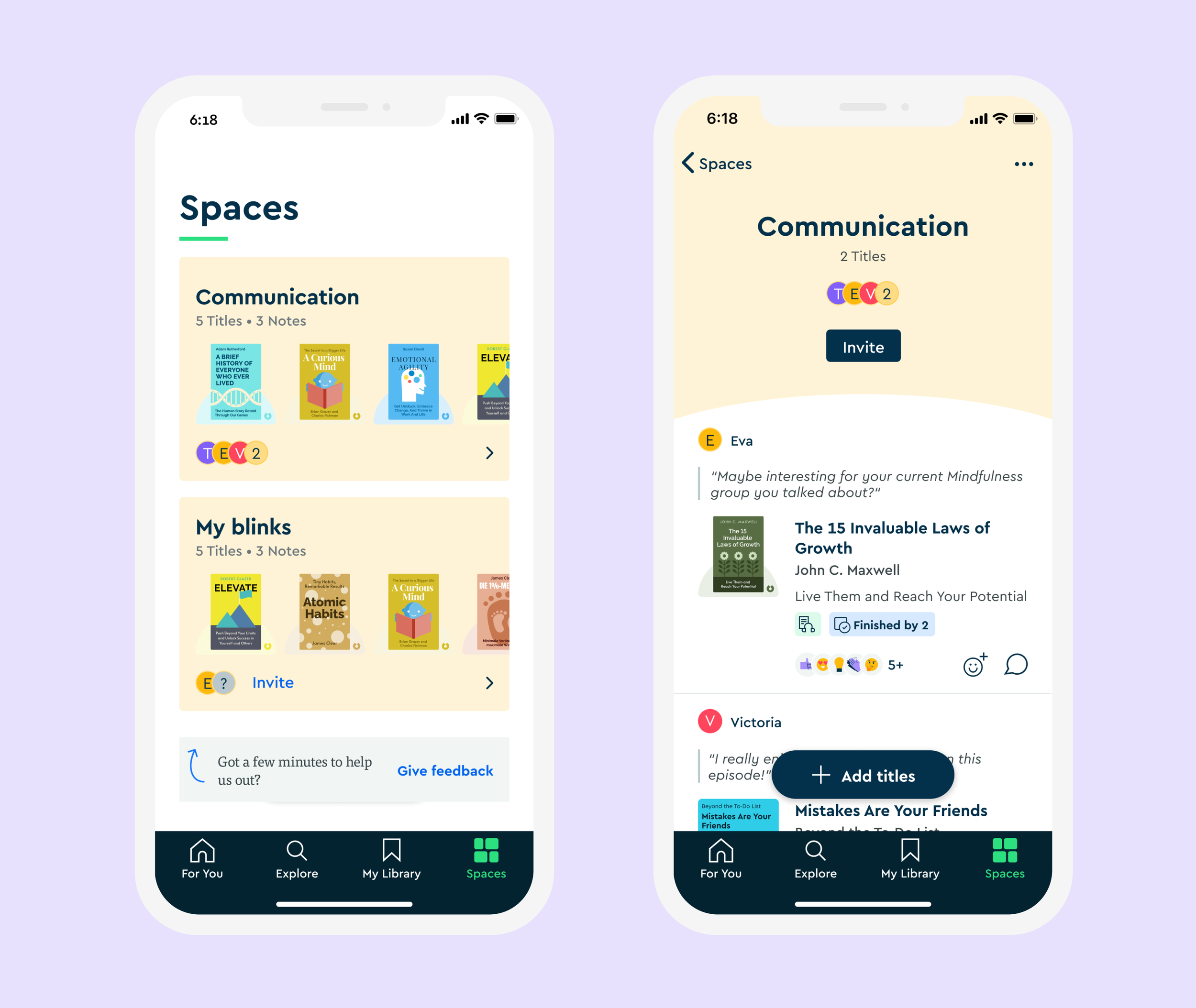
of Spaces users created Spaces without inviting anyone.
Library redesign
Save, organise, share. All in one place.
Consolidating the core experience, making saving, organising and sharing better everywhere: for over 780,000 users.
MY ROLE
Leading the consolidation
I led My Library and Spaces from 0 to 1: research, problem definition, design, scoping and implementation with the PM and developers.THE CHALLENGE
Too many ways to save
Collections, Guides and Spaces served similar jobs. Customers wanted fewer options and a simpler Library.REACH
780k+ users
A change to Blinkist’s core experiencePeople wanted a simpler Library. Not another way to save.
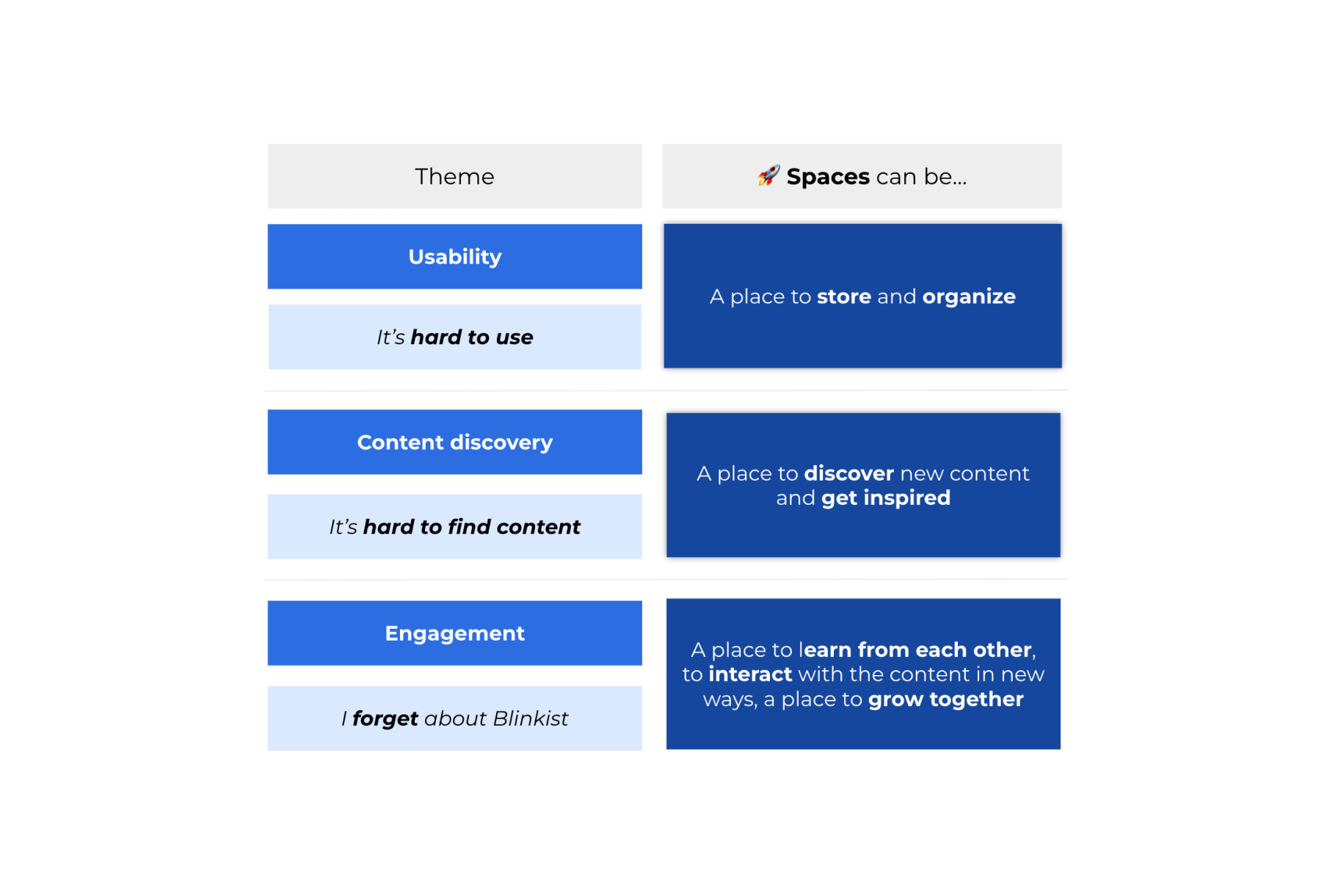
Collections, Guides and Spaces served similar jobs. Across research studies, customers described the feature offering as overwhelming. The opportunity was to consolidate what existed, rather than add more.
requested better Library management.
“I will be able to see everything that I’ve saved which is wonderful”
How did we get there?
Pitching the future of Spaces
I created a visionary prototype connecting personal organisation with recommendations and shared learning. Spaces could serve both needs: curate for yourself first, then share when it feels relevant.
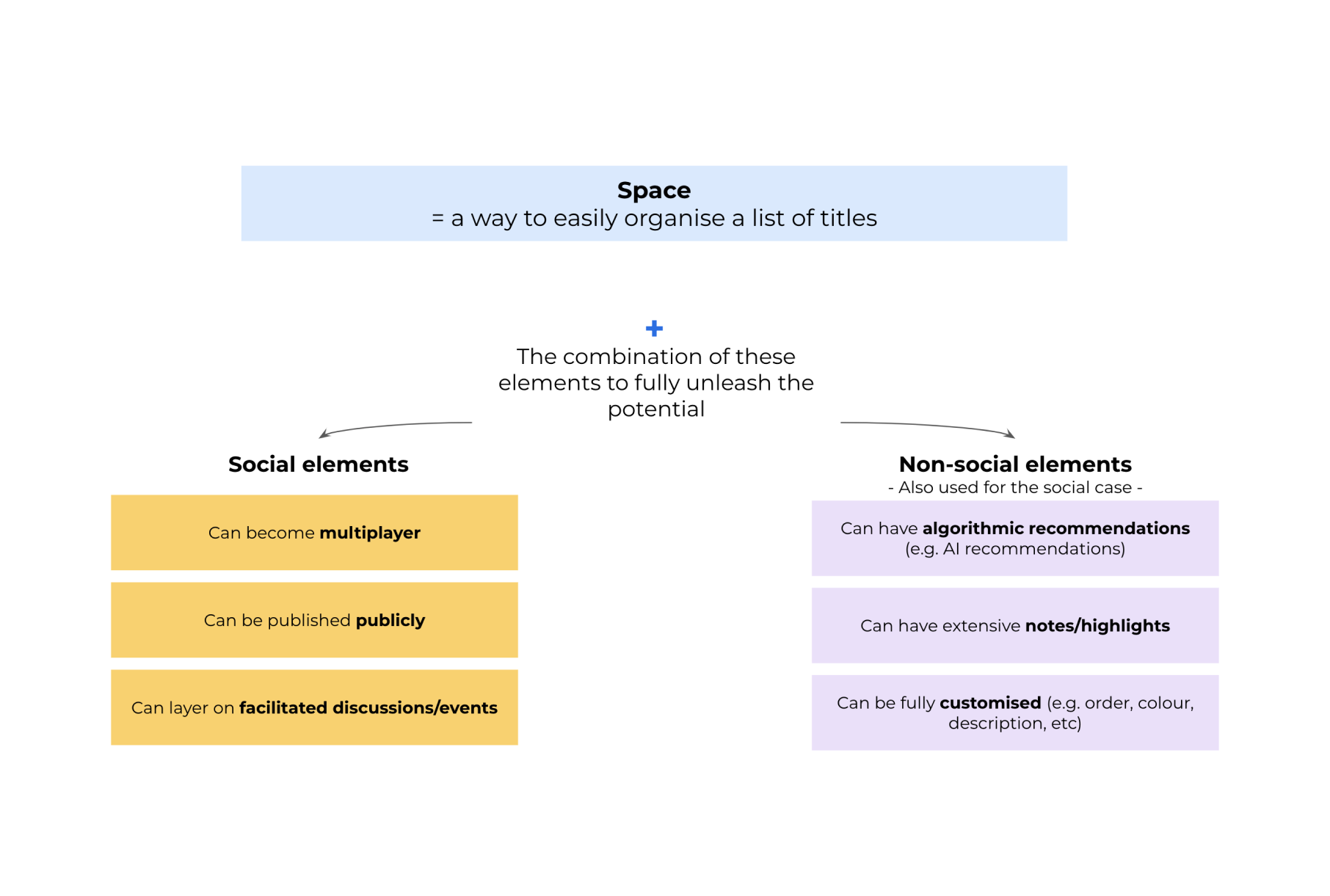
The alternatives
Where should Spaces live?
Information architecture
One Library. A clearer structure.
Together with a developer, I scoped the work in phases to deliver incremental value while learning. The architecture serves one job:
save, curate and consume content for myself and others.
01 / ConsolidateRemove overlapping destinations.
02 / OrganiseUse Spaces for personal curation.
03 / ShareBuild sharing on the same model.
The saving journey
Save an idea. Wherever it finds you.
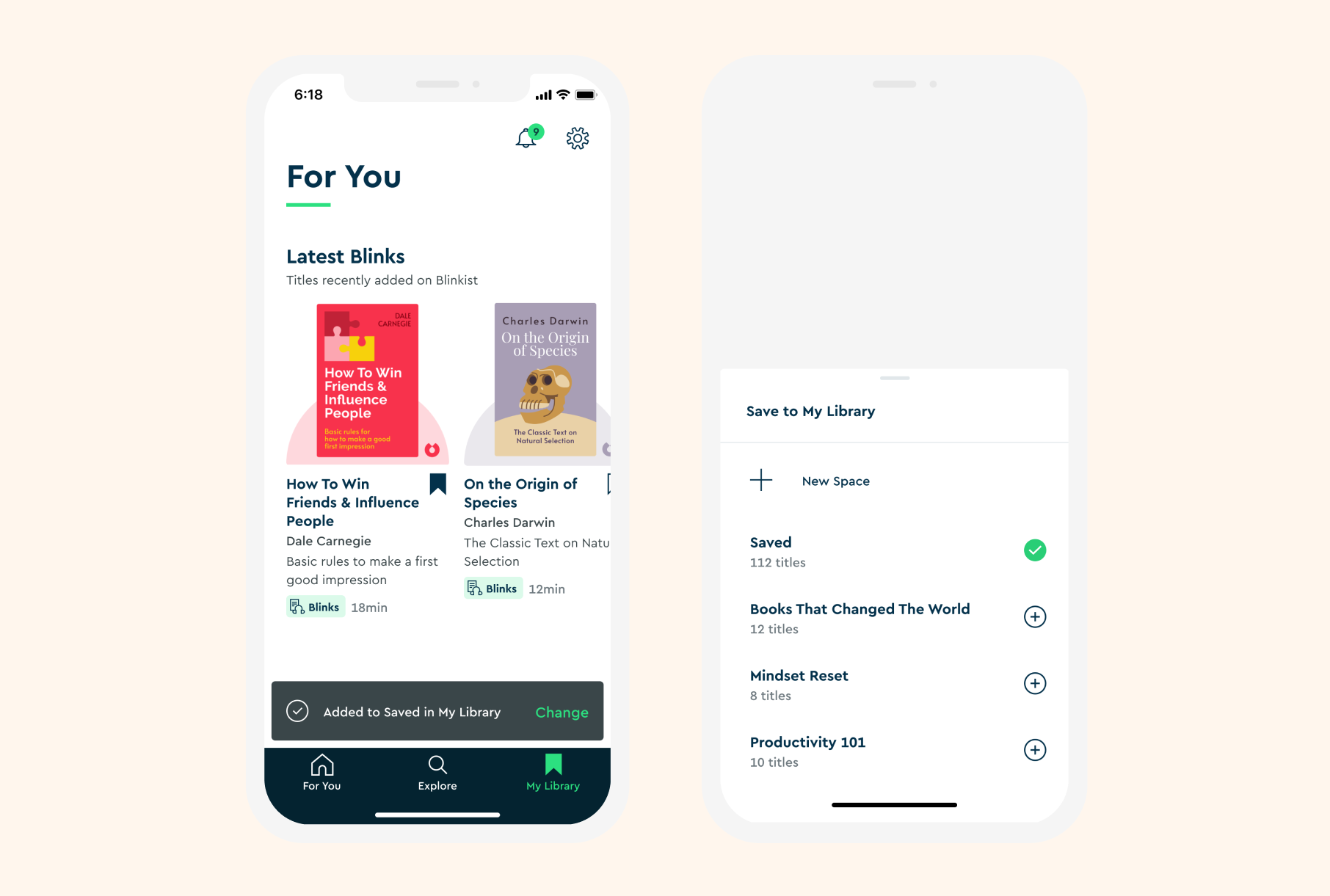
I introduced a consistent way to create a Space and add titles:
from For You, Explore or a title’s cover.
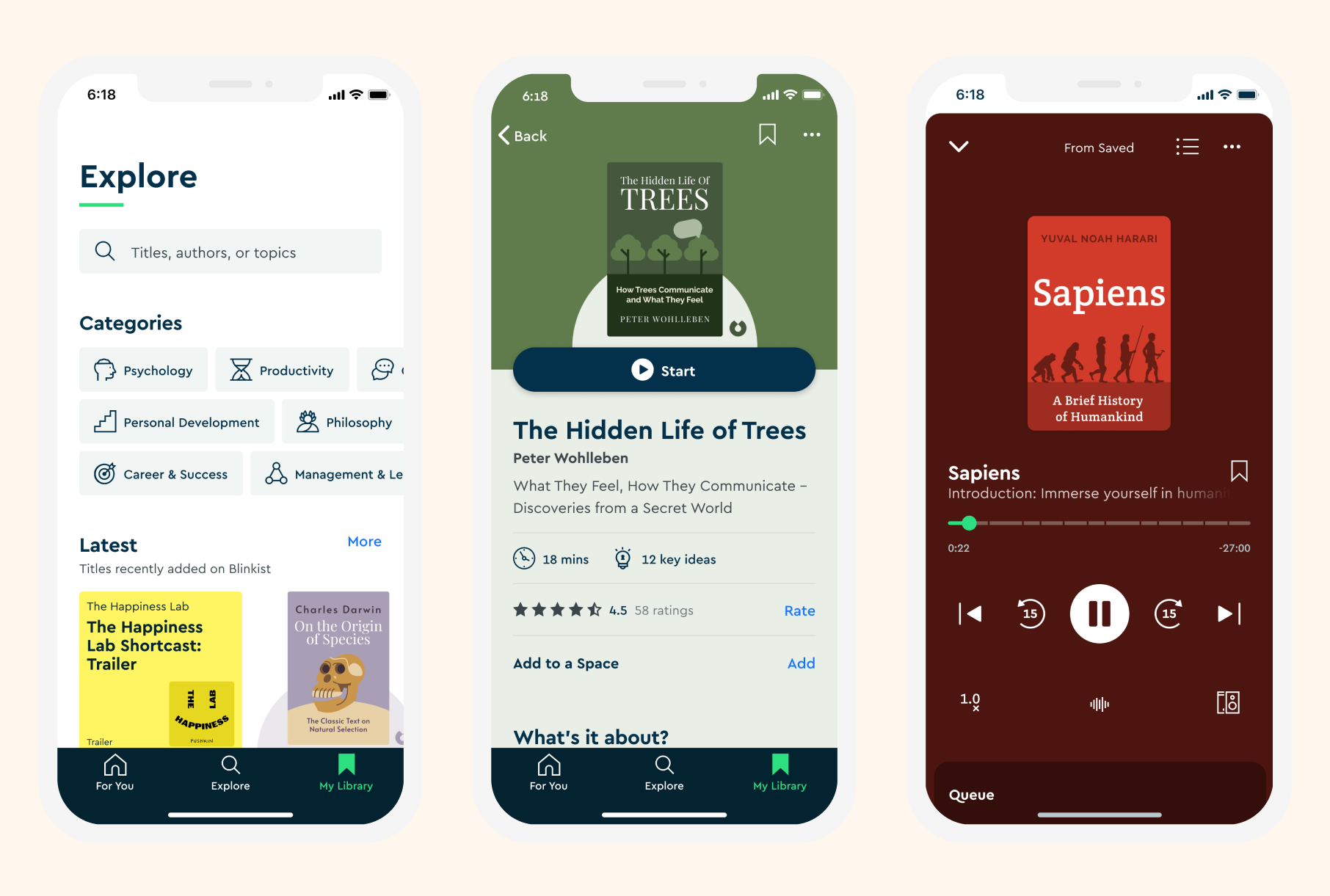
BrowseFind a title worth keeping.
SaveAdd it to an existing or new Space.
ReturnFind it again in the Library.
Fewer duplicated jobs.
A consolidated structure reduces information and cognitive overload. Spaces replace favourites and collections, giving customers a more flexible way to organise their Library.
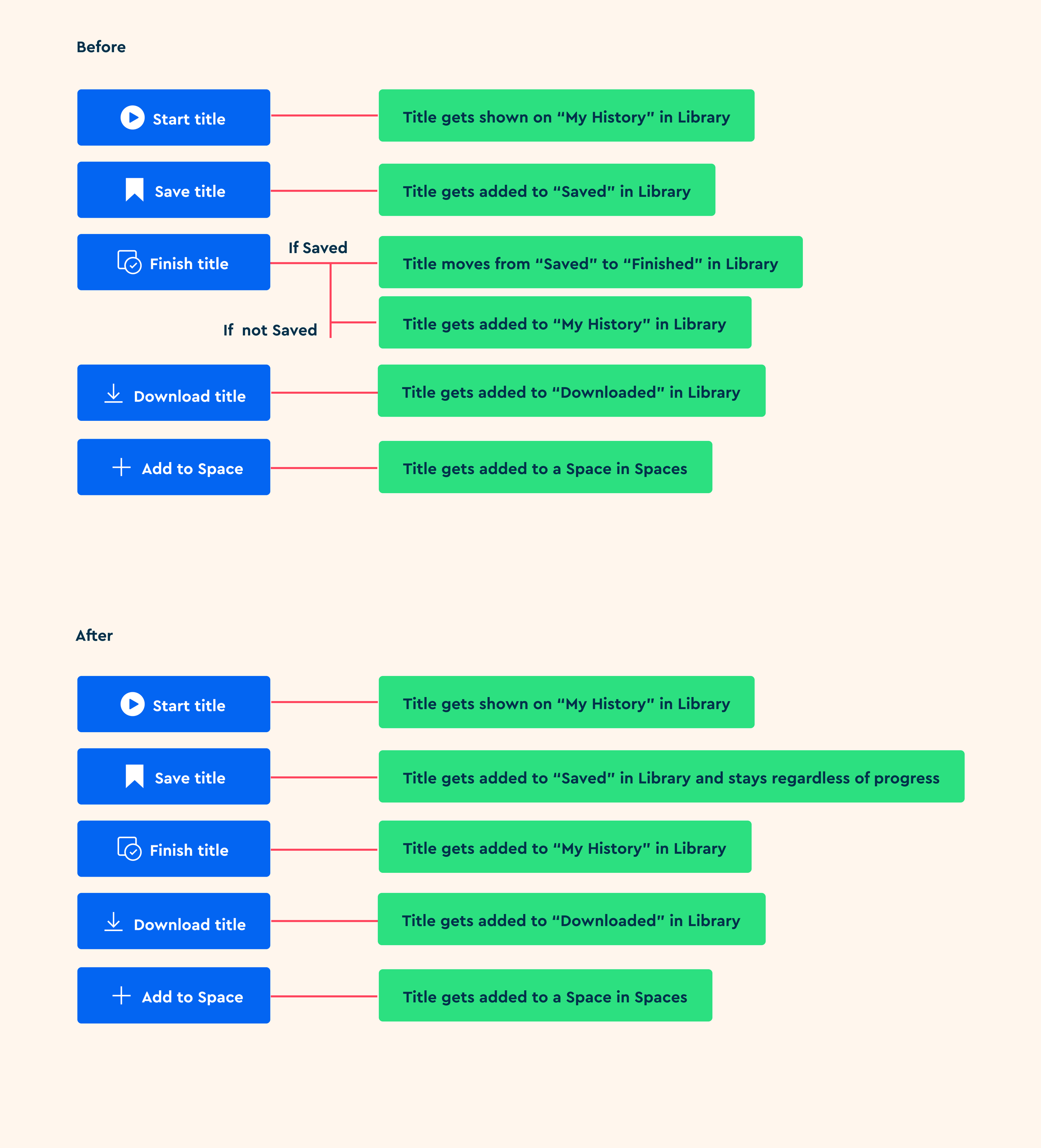
Saved should stay saved.
When people bookmark a title, they expect it to remain in Saved regardless of its status. I stopped finished titles disappearing from Saved and brought in-progress and finished content together in History.
Saving in action
Organisation, in the moment.
Earlier saving concepts tested positively but leaned towards power users.
I tested a simpler, more discoverable approach for different types of users, with Spaces now at home in the Library.
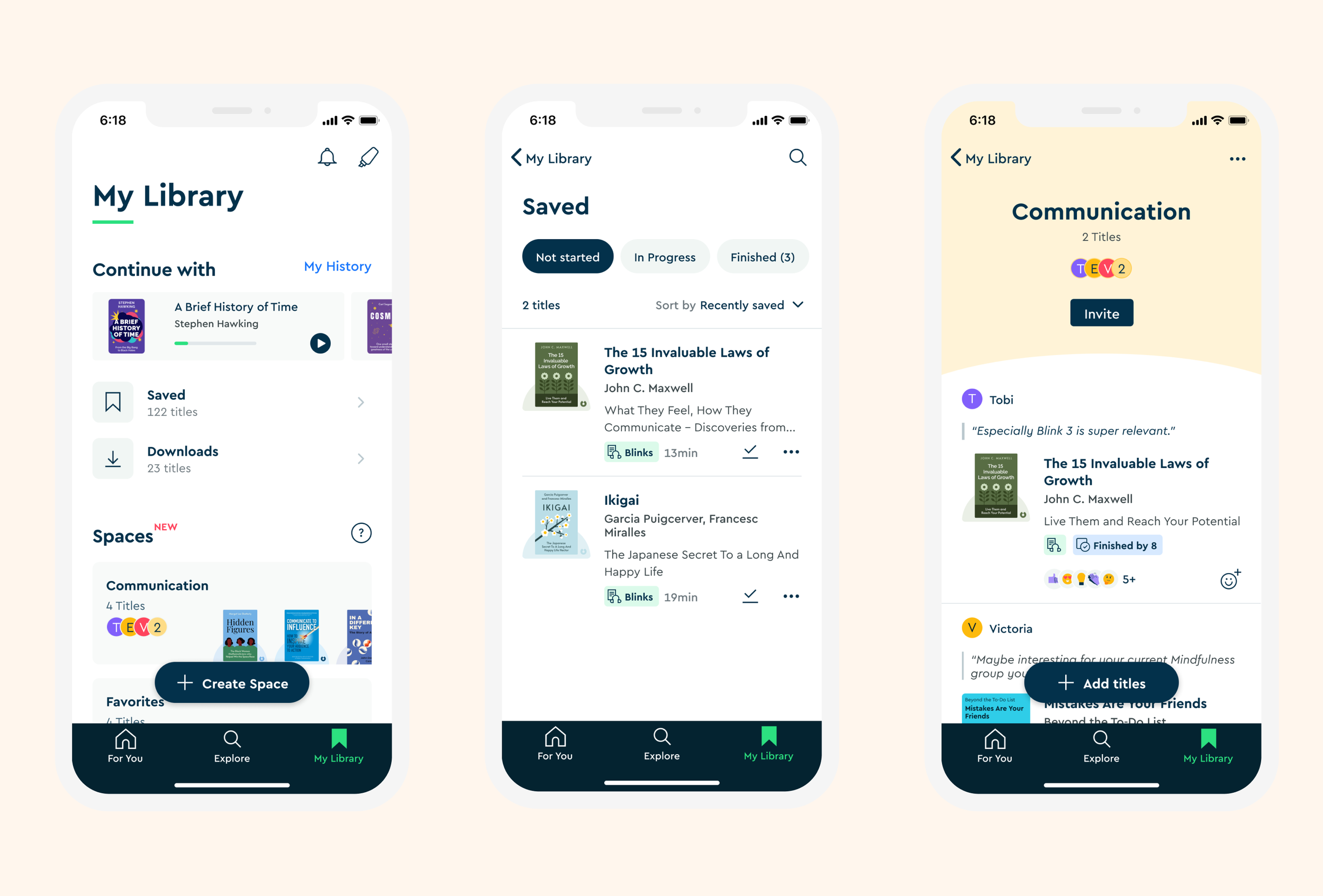
A simpler experience. Before and after.
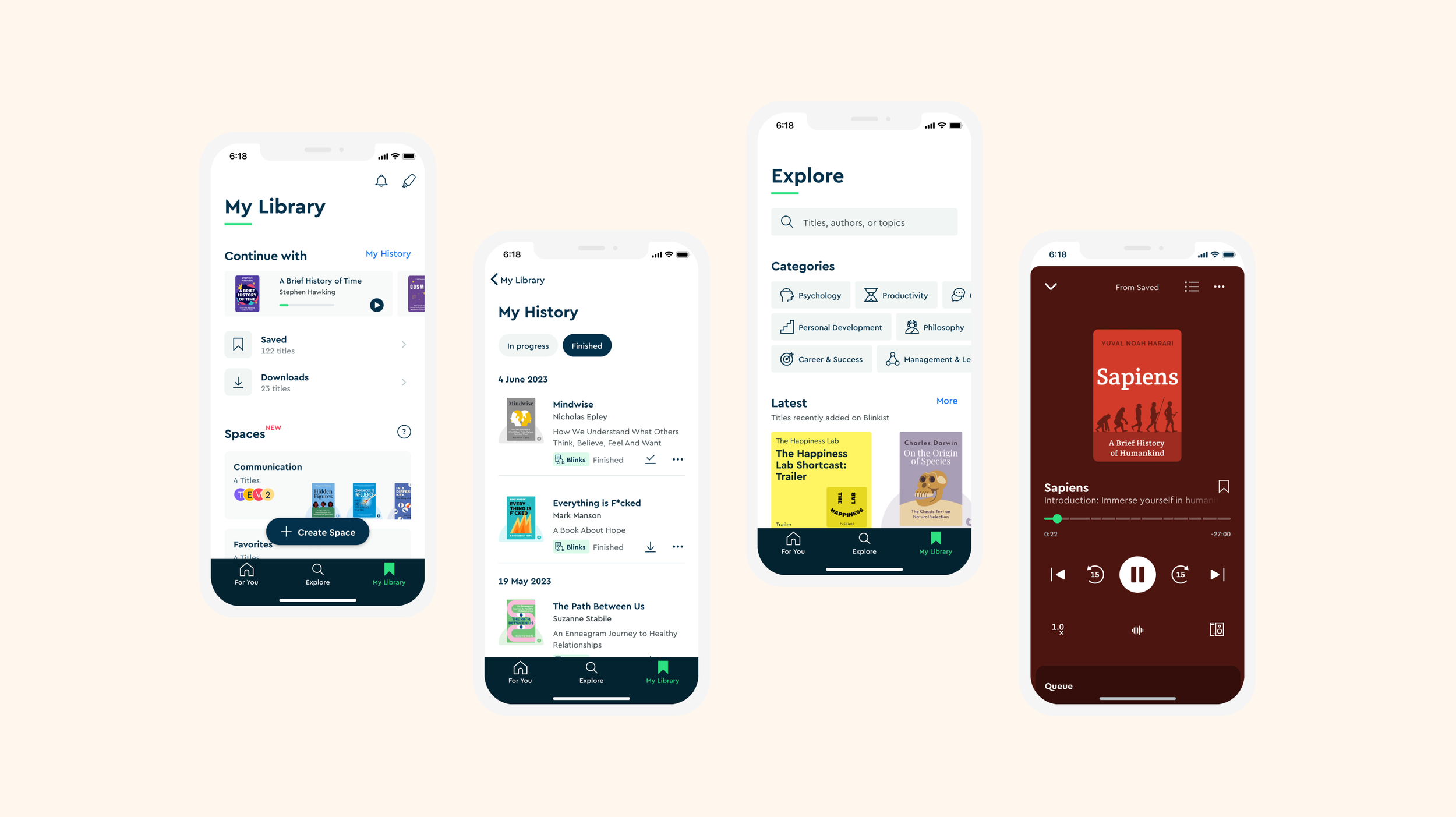
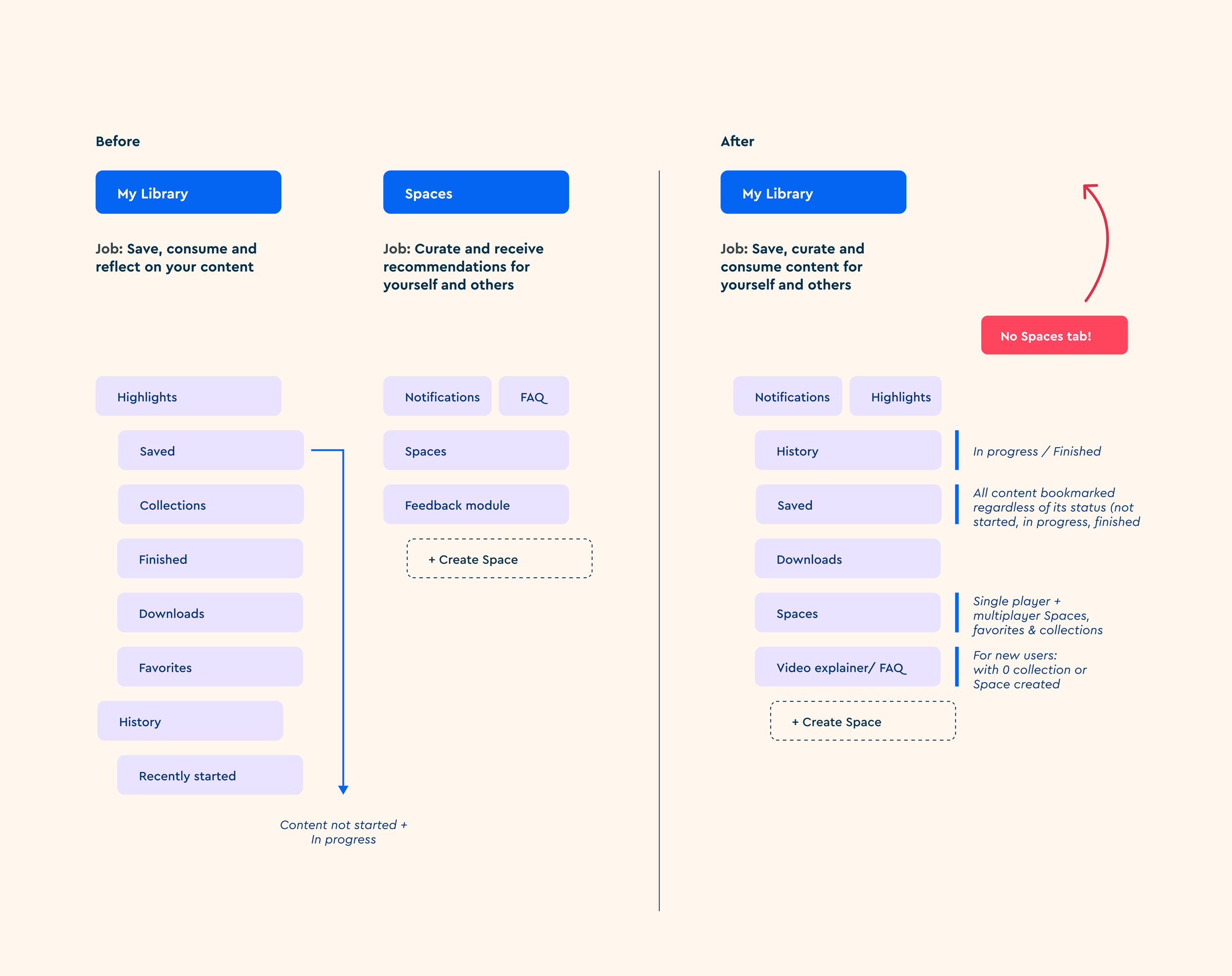
The previous Library had four tabs and many submenus. Spaces moved into the Library; existing favourites and collections became Spaces.
Personal organisation and sharing now belong to the same experience.
BeforeOverlapping ways to organise content.
AfterOne Library for saving, organising and sharing.
Feedback from user research
“I will be able to see everything that I’ve saved which is wonderful”
“It helps you categorize your different books so that helps you find them quickly”
“I can organize my Library better which was a big pain point”
One Library. More engagement.
The consolidation reached over 780,000 users. Spaces became a place to organise titles for yourself and share them with others.
Early results showed increased Spaces activity in both personal and social settings. Users were naturally organising titles for themselves; this behaviour helped shape the redesign.
Read about the release in Blinkist Magazine ↗